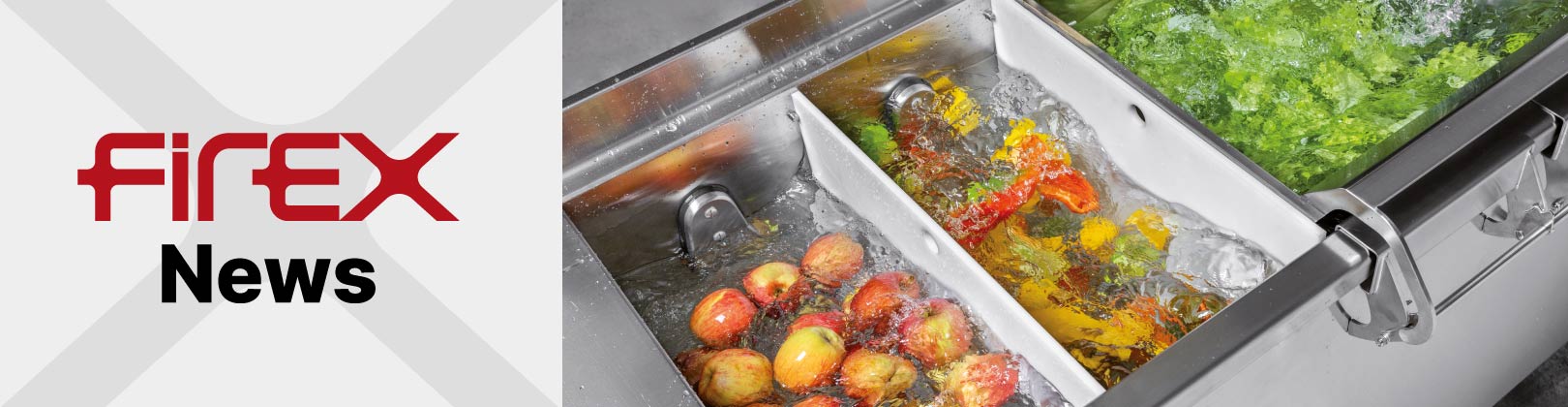
In today’s agri-food industry, industrial fruit washing systems play a critical role in ensuring food safety and maintaining high quality standards. These processes not only remove visible dirt and contaminants but are also essential for eliminating pesticide residues and harmful bacteria that may negatively affect consumer health.
Given the wide variety of fruit—from delicate strawberries to more robust apples—tailored washing solutions are required to preserve their quality while ensuring effective cleaning.
Why industrial fruit washing is essential
Industrial fruit washing is a critical step in the food processing chain. It goes far beyond simply removing dirt: it effectively eliminates pesticide residues and microbial contamination, making a significant contribution to food safety.
Furthermore, thorough washing improves the fruit’s overall appearance and perceived quality, while also helping to extend shelf life and preserve the flavor of the final product.
Main types of industrial fruit washing
Washing with water and food-grade detergents
The most traditional method uses water combined with food-grade detergents, specifically formulated to be safe for direct contact with food products.
These detergents typically have a neutral or slightly alkaline pH to maximize cleaning performance without damaging the fruit. Although this method is widely used due to its effectiveness, it also presents certain challenges, such as managing detergent residues and minimizing environmental impact.
Washing with chlorinated water or disinfectants
Chlorinated water is commonly used because of its strong antibacterial properties. Chlorine concentrations are carefully controlled to maximize sanitizing effectiveness without leaving harmful residues.
However, proper management of the process is essential to ensure that chemical residues do not compromise product quality.
Ultrasonic washing
Ultrasonic technology uses high-frequency sound waves to generate microscopic bubbles that collapse upon contact with the fruit, effectively removing stubborn or irregular surfaces through a process known as ultrasonic cavitation.
This method is particularly suitable for delicate fruit, because it provides deep cleaning without direct mechanical contact.
High-pressure water jet washing
High-pressure water jets provide an effective mechanical solution for removing surface dirt and debris. However, this method must be carefully controlled when processing delicate fruit to prevent physical damage. It is particularly well suited to fruit with firmer, more durable surfaces.
Ozone washing
Ozone (O₃) is a powerful oxidizing and disinfecting agent that reduces the need for chemical additives. Ozone-based fruit washing is considered an environmentally friendly solution that supports more sustainable food processing practices. However, the cost of implementing ozone technology can represent a significant investment for some companies.
Mechanical washing with brushes and rollers
This method uses rotating brushes and rollers to clean fruit with tougher skins, such as apples and pears. While highly effective at removing surface impurities, prolonged mechanical contact may cause wear or damage over time, making careful equipment selection and process optimization essential.
Hygiene and safety regulations for fruit washing
European hygiene regulations, particularly Regulation (EC) No. 852/2004, emphasize the importance of controlling fruit washing processes and establish specific obligations for food business operators. Regulation (EC) No. 852/2004 is a cornerstone of European food safety legislation. It requires all food business operators to implement food safety management systems based on the principles of HACCP (Hazard Analysis and Critical Control Points.
To comply with the regulation, operators must meet several key requirements, including:
- Disinfectant concentrations: disinfectants must be used at concentrations that are effective in reducing microbial contamination without leaving harmful residues. These concentrations must comply with applicable regulations and industry guidelines, ensuring the right balance between effectiveness and food safety.
- Contact time: recommended exposure times for disinfectants must be strictly observed to ensure they have sufficient time to effectively eliminate contaminants.
- Microbiological controls: regular microbiological monitoring is required to verify the presence of pathogenic microorganisms. These tests help assess the effectiveness of washing procedures and ensure that finished products are safe for consumption.
Compliance with hygiene and food safety regulations is closely linked to consumer protection. Effective fruit washing significantly reduces the risk of contamination, helping to prevent foodborne illnesses and ensuring that products meet the highest safety standards.
Adhering to these requirements is also essential for obtaining internationally recognized food safety certifications such as ISO 22000 and BRCGS (formerly the British Retail Consortium Global Standard for Food Safety). These certifications demonstrate a company’s commitment to producing safe, high-quality food while continuously improving its food safety management systems. Quality certifications provide a significant competitive advantage by strengthening consumer confidence and facilitating access to domestic and international markets. They show that a company not only complies with current regulatory requirements but also takes a proactive approach to continuous improvement, ensuring the highest standards of food safety and product quality.
Innovations and trends in fruit washing technologies
The industry is seeing growing interest in sustainable fruit washing technologies, including ozone treatment and water recycling systems.
These innovations not only improve the efficiency of washing processes but also reduce their environmental impact, meeting the increasing demand for sustainability across the agri-food sector.
Choosing the right industrial washing method
Selecting the most suitable fruit washing method requires a careful evaluation of the advantages and limitations of each solution, taking into account the specific characteristics of the fruit and the production process. Industrial fruit washing systems provide complete, customizable solutions designed to meet a wide range of processing requirements.
Discover the professional industrial fruit washing solutions offered by Firex, designed to ensure maximum food safety and product quality. Among them is Dreener Line, a professional industrial fruit and vegetable washer that represents a state-of-the-art solution for washing fresh produce.
Ideal for foodservice businesses, food processing facilities, and catering services, Dreener Line allows operators to wash large quantities of fruit and vegetables in a single cycle, saving valuable time while ensuring the highest hygiene standards.
Manufactured using premium-quality materials, Dreener Line incorporates advanced technology to deliver outstanding performance. One of its distinctive features is the AISI 304 stainless steel tank, designed with a shaped bottom that ensures complete drainage of water and residues. It also includes a removable false bottom that protects delicate produce during the washing process.
The innovative “Limpid Water” system keeps the washing water continuously clean through high-pressure nozzles that remove dirt deposits from the bottom of the tank. Dreener Line also features modular washing tanks with removable partitions, allowing operators to adapt the washing capacity to different quantities and types of fruit and vegetables while reducing both water and energy consumption.










